As an Amazon Associate this site earns from qualifying purchases.
Quick Picks
| Product | What it is | Best suited to | Link |
|---|---|---|---|
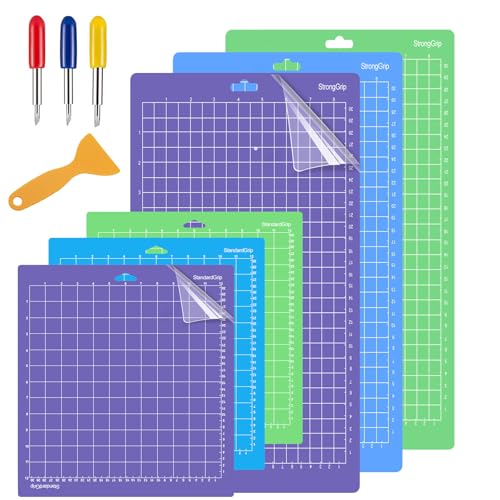
| 6PCS Cutting Mats Compitable with Explore Air 2/Air/One/Maker 3/Maker | Variety pack of mats in standard, light, strong and fabric grip, plus five point, deep cut and shallow cut blades; the listing's stated mat and blade quantities conflict, so confirm counts with the seller [S4] | Crafters who cut several material weights on an Explore Air 2/Air/One/Maker machine [S4] | Check Price on Amazon |
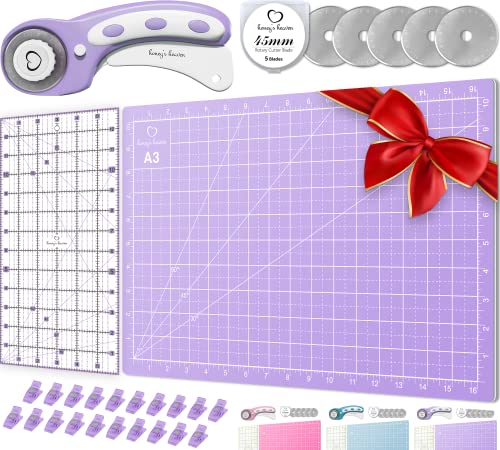
| Rotary Cutter Set lavender - Quilting Kit incl. 45mm Fabric Cutter | 45mm rotary cutter, 5 spare blades, 18" x 12" (A3) self-healing mat, ruler, clips [S3] | Anyone who needs a larger hand-cutting surface next to the machine [S3] | Check Price on Amazon |
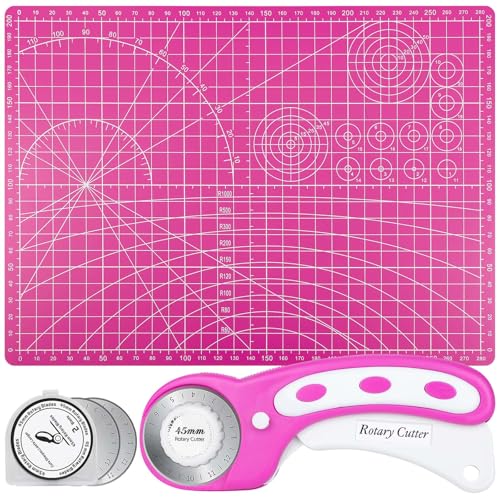
| Rotary Cutter and Mat Set, Audab Self Healing Sewing Mats Shirt Cutter | 45mm rotary cutter, 2 spare replacement blades, 9" x 12" (A4) self-healing mat [S5] | Small desks and trim-to-size prep work [S5] | Check Price on Amazon |
Disclosure: We earn a small commission from qualifying Amazon purchases at no extra cost to you.
As an Amazon Associate we earn from qualifying purchases. This page contains affiliate links, and we may receive a commission if you buy through them — at no extra cost to you.
As an Amazon Associate, we earn from qualifying purchases.
Last Updated: September 2026
The short answer: match the mat's grip strength to the weight of your material, match the blade to the material's thickness, and change one variable at a time when a cut fails. Cardstock generally belongs on a standard-grip mat, printer paper and vellum on a light-grip mat, thick or glitter cardstock and faux leather on a strong-grip mat, and fabric on a fabric mat. That mapping is exactly how one multi-mat variety pack describes its own four grip levels [S4].
Most "my machine won't cut" problems are not machine problems. They are grip problems, blade problems, or the material shifting mid-cut.
The Problem: Three Variables, One Bad Cut
Here's the thing. When a cut tears, drags, or fails to release, three things could be wrong: the mat isn't holding the material, the blade is dull or the wrong type, or the depth/pressure setting doesn't suit the material's thickness. Change all three at once and you learn nothing.
The mat is the variable people ignore longest. Adhesive mats lose tack as they collect fibre, paper dust and vinyl scraps. One mats-and-blades bundle explicitly tells buyers to replace the clear film cover after each project to keep scraps and dust off the adhesive layer, and to use only the recommended material type on each mat, on the grounds that this keeps the mats lasting longer [S4]. That is seller guidance, not an independent durability test — but it is the correct habit regardless.
Step-by-Step: Diagnosing and Fixing a Bad Cut
- Confirm the mat grip matches the material. Standard grip is described for medium-weight materials such as cardstock, textured paper, vellum and vinyl; light grip for lightweight materials such as printer paper and light cardstock; strong grip for heavy-thickness materials such as thick or glitter cardstock, magnet, faux leather and foam; fabric grip for fabric, cotton, felt and leather [S4]. If your cardstock is lifting, you are probably a grip level too low.
- Burnish the material down. Press the sheet flat across the whole mat, not just the corners. Lifted edges are what the blade catches on.
- Check the blade type before the depth. A deep cut blade and a shallow cut blade are not interchangeable; the same bundle is listed with deep cut, five point and shallow cut blades for different project types, although its stated blade quantities conflict and should be confirmed with the seller [S4]. Swapping blade type solves problems that no depth adjustment will.
- Adjust depth or pressure in single increments. Go one step at a time and re-run a small test shape in a corner of the material. Note that the supplied listing information for these products does not publish machine-side depth or pressure numbers, so use your machine's own material settings as the baseline.
- Do a test cut every time you change material brand. Two "65 lb cardstock" sheets from different mills behave differently.
- Retire the mat when burnishing stops helping. No listed source states a lifespan for any mat here, so judge it by whether the material still stays put.
Which Cricut Mat for Cardstock?
Standard grip for ordinary cardstock; strong grip once you move to thick or glitter cardstock. That split comes straight from the material application guidance on the multi-grip bundle [S4]. Glitter cardstock is heavier and more abrasive than plain cardstock, which is a reasonable explanation for why it is grouped with magnet and faux leather rather than with plain stock — though the listing states the grouping, not the reason.
AutoBlade vs Deep Point Blade
Different tools for different depths. Deep-cut style blades exist for thicker stock; shallow blades exist for thin, delicate materials. The variety bundle includes deep cut, shallow cut and five point blades together, which is the practical argument for owning a set rather than one blade [S4]. Note that AutoBlade is a specific manufacturer's product name and none of the listings supplied here describe an AutoBlade, so treat brand-specific auto-adjusting behaviour as something to confirm with your machine's manufacturer.
Tools and Products You'll Need
6PCS Cutting Mats Compitable with Explore Air 2/Air/One/Maker 3/Maker — Best for covering four material weights on one Explore or Maker machine
This is the only product here that speaks directly to the machine side of the workflow. For the 6PCS Cutting Mats Compitable with Explore Air 2/Air/One/Maker 3/Maker (B0DDT38KMC), the listing is internally inconsistent about quantities: it claims six mats and three cutting blades in total, then itemises four mats (standard grip, light grip, strong grip and fabric grip) and five blades (five point, deep cut and shallow cut), while the title refers to 12x24 and 12x12 mats. Because those figures cannot be reconciled from the listing alone, confirm the exact mat and blade counts with the seller before ordering. The listing does describe the mats and blades as compatible with Explore Air 2/Air/One/Maker machines [S4]. Mats are printed with grid lines for measuring, and the seller describes the adhesive as sticky enough to hold material yet peelable without residue [S4].
Strengths: the grip range covers everything from printer paper up to foam and faux leather in one purchase [S4], and the blade mix means you are not stuck mid-project with only one depth option [S4]. The mats are described as non-toxic PVC [S4].
Limitations worth knowing: the seller's "better value than the brand ones" line is a marketing claim, not verified pricing or performance comparison [S4]. The title mentions 12x24 and 12x12 sizes; the feature bullets list the mats by grip type rather than confirming which grip corresponds to which size, so confirm sizing with the seller before ordering. Compatibility is stated for the machines named above only [S4].
Rotary Cutter Set lavender - Quilting Kit incl. 45mm Fabric Cutter — Best for the largest hand-cutting surface of the sets here
Off-machine prep matters more than crafters admit. This kit includes a 45mm rotary cutter, five spare 45mm blades, an acrylic ruler, craft clips and an 18" x 12" (A3) double-sided self-healing mat built from 5-ply material, 3 mm thick, with a 16" x 10" printed grid [S3]. At 18" x 12", that mat is the largest of the two hand-cutting mats named on this page, which is the practical reason to pick it if you trim yardage or full sheets rather than scraps [S3].
The manufacturer describes SKS-7 steel blades suitable for paper, denim, vinyl and other materials, and states the tool can cut six layers of fabric or paper at once [S3]. A safety lock prevents the handle being pressed when the blade is not in use [S3]. Five spare blades is a genuinely useful count if you cut vinyl and denim, which dull edges faster than quilting cotton.
One scope note: the manufacturer's six-layer figure is its own claim about the tool, not a verified result, and it does not tell you how the tool behaves on your specific fabric stack.
Rotary Cutter and Mat Set, Audab Self Healing Sewing Mats Shirt Cutter — Best for small-desk trimming beside the machine
A tighter kit: the Rotary Cutter and Mat Set, Audab Self Healing Sewing Mats Shirt Cutter (B0FFYCZXZZ) is listed as including 1pc 45mm rotary cutter, 2pcs SK7 replacement blades and 1pc 9" x 12" self healing cutting mat, described elsewhere in the listing as an A4 mat [S5]. That listing describes the A4 mat as made of 5-layer self-healing PVC material and double-sided printed with inches, metric gridlines and different angles [S5]. Note that this listing is inconsistent about the blade steel — one bullet calls them "2pcs SK7 replacement blades" and another says they are "made of SKS-7 steel" — so confirm the steel designation with the manufacturer or seller [S5]. The cutter is described as suitable for right- and left-handed users and has a safety button to keep the blade shut or open [S5].
Who it suits: someone whose bench is already crowded by a machine, a press and a mat stack. Who it doesn't: anyone squaring up large panels, since the 9" x 12" mat is smaller than the 18" x 12" mat in the lavender kit [S3][S5]. The replacement blade count is two rather than five [S3][S5], so budget for refills if vinyl and leather are your regular materials — the listing does describe the cutter as handling fabric, leather, paper and felt vinyl [S5].
How to Clean a Cutting Mat
Start with prevention. The mats bundle instructs users to put the clear film cover back over the mat after each project to keep scraps and dust off the adhesive, and describes the mats as easy to clean and adhesive after repeated uses [S4]. For gentle lifting of fibre and paper dust, a scraper and light adhesive-tape lifting are the standard low-risk moves. Avoid harsh solvents; none of the listings supplied here specify an approved cleaning chemical, so check the mat manufacturer's own instructions before wetting or scrubbing a mat.
Self-healing rotary mats are a different object entirely. They are cut surfaces, not adhesive ones. The Rotary Cutter Set lavender - Quilting Kit incl. 45mm Fabric Cutter (B084TM5K55) describes a double-sided self-healing mat made from durable 5-ply material for accurate cutting [S3]. The Rotary Cutter and Mat Set, Audab Self Healing Sewing Mats Shirt Cutter (B0FFYCZXZZ) describes a 5-layer self-healing PVC mat made to protect the work surface and keep the blade sharpness [S5].
Tips for Best Results
- Buy grip variety before you buy a second machine. Most failed cuts are holding failures.
- Keep one mat per material family. The mats bundle's own guidance is to use only the recommended material types on each mat [S4].
- Store mats flat with the cover film on [S4].
- Change rotary blades on a schedule, not after they visibly fail — which is why spare-blade counts (five in the lavender kit, two in the Audab kit) matter at purchase [S3][S5].
- Use the printed grids. The Rotary Cutter Set lavender - Quilting Kit incl. 45mm Fabric Cutter (B084TM5K55) has a double-sided mat with a 16" x 10" printed grid [S3]. The Rotary Cutter and Mat Set, Audab Self Healing Sewing Mats Shirt Cutter (B0FFYCZXZZ) has a mat double-sided printed with inches, metric gridlines and different angles [S5].
Common Mistakes to Avoid
- Forcing thick glitter cardstock onto a light-grip mat instead of a strong-grip one [S4].
- Treating blade depth as the fix for a blade-type problem.
- Assuming a rotary cutter mat and a machine mat are interchangeable. They are not the same product class.
- Leaving the safety lock disengaged on a rotary cutter; both kits here include a safety lock or button for exactly that reason [S3][S5].
- Reading a seller's value or eco claim as independent certification. For general consumer product safety guidance, the CPSC publishes resources at cpsc.gov [S1] and USA.gov hosts consumer protection information [S2].
How We Research
This website does not perform hands-on testing. For this guide, each product was assessed from its Amazon Creators API verified product record and its published product listing feature bullets, retrieved 2026-09-09, and claims were kept to what those listings state. Where a listing does not publish a figure — mat lifespan, blade longevity, cleaning chemistry — the guide says so rather than estimating.
Final Verdict
If you run an Explore Air 2, Air, One or Maker machine and you are still cutting everything on one tired mat, the 6PCS Cutting Mats Compitable with Explore Air 2/Air/One/Maker 3/Maker is the most directly useful item on this page, because it supplies four grip levels and three blade types in a single purchase [S4]. For hand prep, the choice is a surface-size decision: take the Rotary Cutter Set lavender - Quilting Kit incl. 45mm Fabric Cutter for its 18" x 12" mat and five spare blades if you cut large pieces [S3], or the Rotary Cutter and Mat Set, Audab Self Healing Sewing Mats Shirt Cutter with its 9" x 12" mat if bench space is the constraint [S5].
Related Resources
- Heat press temperature and pressure basics
- Vinyl types explained: HTV, adhesive and specialty
Sources & Methodology
Nobody on this site cut a sheet of cardstock, timed a blade, or ran a mat through a lab; there is no lab here. What this page is built on is close reading of three Amazon Creators API verified product records and their listing feature bullets, all retrieved 2026-09-09, cross-checked against each other so that a spec belonging to one kit never gets attributed to another. For blades and mats that is a reasonable basis for the decisions that actually matter at checkout — grip level, mat dimensions, blade type and spare-blade count are all published figures — while questions of how long an adhesive mat stays tacky in your studio are not answerable from listing data and are flagged as such throughout.