As an Amazon Associate this site earns from qualifying purchases.
Quick Picks
| Product | Best for | Key published spec | Link |
|---|---|---|---|
| PUNCIA 3-Tier Movable Heat Press Table Foldable Stand with Workbench | Small rooms that need work surface on demand | 18.9" x 17.5" two-sided expansion platform | Check Price on Amazon |
| 3 Tier Movable Heat Press Table, Foldable Heat Transfer Machine Stand | Multi-machine workflows with cable clutter | 16-compartment vinyl roll holder, built-in power outlet | Check Price on Amazon |
| Ardier Movable Heat Press Machine Cart with Basket and Hooks | Buyers who want stated load numbers | Upper board up to 50 lbs, lower board up to 44 lbs | Check Price on Amazon |
| VINYL FROG 30PCS Heat Transfer Vinyl Bundle with Tools – 20 Sheets PU Iron on Vinyl + 5 Metallic HTV | Starting from zero, tools included | 25 sheets plus scraper, weeding pen, tweezers, cutting mat, Teflon sheet | Check Price on Amazon |
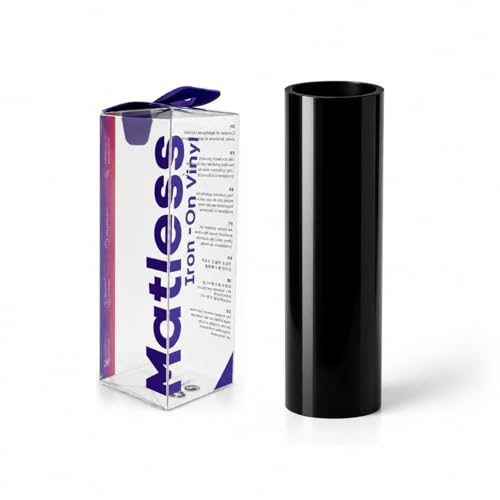
| EEH Matless Smart Iron On for Cricut Joy & Joy 2 | Cricut Joy owners doing long lettering | Single black roll, 5.5 in x 10 ft, no mat required | Check Price on Amazon |
| Venitor Color Changing Puff Vinyl Heat Transfer 3D Foaming Vinyl-6 Sheets 12''x 10'' for Cricut | Novelty puff designs that shift color outdoors | 6 sheets at 12 x 10 in, UV color-changing | Check Price on Amazon |
Disclosure: We earn a small commission from qualifying Amazon purchases at no extra cost to you.
As an Amazon Associate, we earn from qualifying purchases.Last Updated: September 2026
Most people buy the heat press first and think about everything else later. Then the press lands on a wobbly folding table, the vinyl rolls live in a shopping bag under the desk, and every shirt gets eyeballed for placement instead of measured. That is where projects go sideways — not at the machine, at the workspace around it.
This guide covers the supporting cast of a heat transfer setup: press mats and PTFE sheets, pressing pillows, alignment rulers, vinyl storage, and the rolling stand or table that holds it all. You will learn what each item actually does, which specifications on a listing are worth reading closely, and which recommendations in this guide are supported by published specs rather than vibes.
One thing up front, because it shapes everything below: this website does not do hands-on testing. Every product fact here comes from the manufacturer's published listing information, and it is attributed as such.

Types of Heat Transfer Supplies Explained
Heat transfer supplies fall into four jobs: protecting surfaces, controlling pressure, controlling placement, and controlling clutter. Buy one item from each job and your failure rate drops for reasons that have nothing to do with your press brand.
| Supply type | What it is for | Consider skipping it if |
|---|---|---|
| Heat press mat | A cushioned, heat-resistant pad you place under the garment to even out pressure and protect the surface below | Your press has a proper padded lower platen and you never press on a table |
| PTFE / Teflon cover sheet | A non-stick barrier laid over the design so adhesive and carrier film never touch the platen | You use parchment or a cover sheet supplied with your press and replace it often |
| Pressing pillow | A firm foam insert placed inside or under the garment to lift the print area above seams, zippers and collars | You only press flat, seam-free blanks such as tote panels |
| Alignment ruler / T-shirt guide | A slotted or marked guide that sets consistent distance from collar and centerline | You are pressing one-offs and eyeballing is genuinely good enough |
| Vinyl storage and press stand | Holds the machine at working height and keeps rolls, sheets and tools reachable | Your press lives on a dedicated bench that already meets those needs |
Heat press mat vs Teflon sheet: they are not interchangeable
A mat sits under the fabric. A PTFE sheet sits over the design. The mat's job is cushioning and heat management for the surface beneath; the cover sheet's job is release, so melted adhesive and glossy carrier film do not bond to your platen. Using one where you need the other is the most common reason a beginner's platen ends up with a permanent shiny ghost of somebody's monogram.
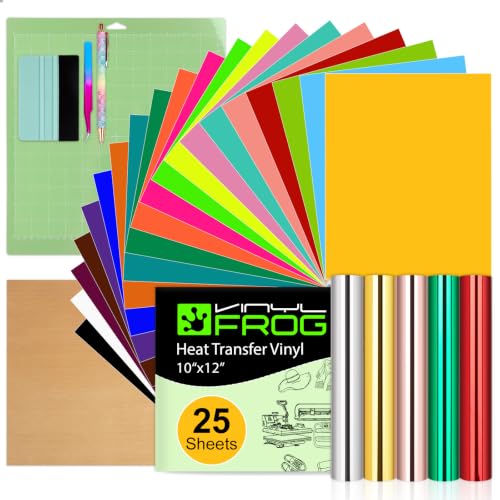
Some starter bundles include a cover sheet so you are not sourcing it separately. VINYL FROG lists 30 pieces: 25 sheets total, made up of 20 PU HTV sheets and 5 metallic sheets, plus a scraper, a weeding pen, tweezers, a 12-inch by 12-inch cutting mat and one Teflon sheet. Note the count — one sheet. Cover sheets are consumables, so plan on buying more once yours picks up adhesive residue.
Heat press pillows explained
A pillow is a pressure-leveling tool, not a heat tool. When a design sits near a seam, a zipper, or a thick collar band, the platen bridges the high spot and under-presses the low spot. Slide a pillow inside the shirt beneath the print area and the design becomes the highest point on the garment, so pressure lands where the adhesive needs it. If your transfers keep lifting at one corner near a seam, that is a pillow problem before it is a temperature problem — see our heat press temperature and pressure guide for the settings side of the same issue.
T-shirt ruler alignment guides
Alignment rulers exist because "centered" is a measurement, not a feeling. A guide fixes two variables: horizontal center relative to the shirt's centerline, and vertical drop below the collar seam. Once those are repeatable, a batch of shirts looks like a product line instead of a craft fair table. This is the cheapest consistency upgrade in the entire hobby and the one people delay longest.
Key Features to Look For, Ranked by Importance
- A stated weight capacity for the surface holding your press. This is the number that matters most and the one most listings leave out.
- Frame and board construction. Material thickness tells you something about deflection under a heavy clamshell. PUNCIA's listing specifies a thickened steel frame using 1-inch by 1-inch steel pipe and a wood board thickness of 0.6 inch.
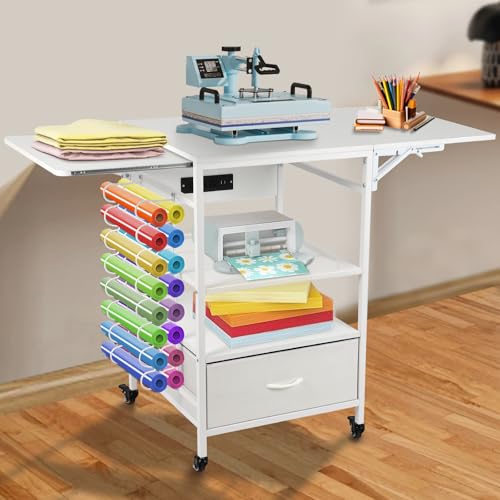
- Brakes on the casters. Rolling is useful; rolling while you slam a press closed is not. The 3 Tier Movable Heat Press Table lists four metal wheels, two of them with brakes, and a built-in power outlet the seller calls a charging station. Ardier's cart is described with four wheels with brakes.
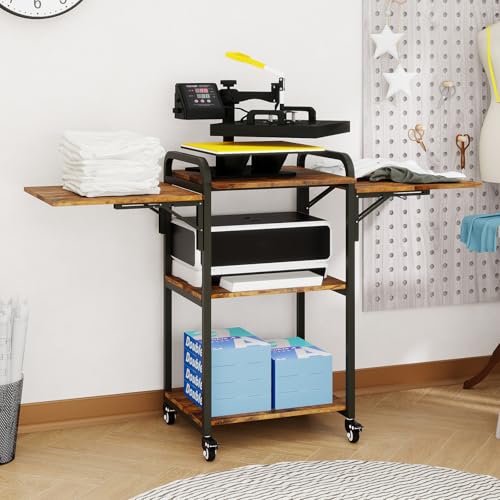
- Expandable work surface. Space to lay out a shirt beside the press changes your workflow more than an extra shelf does. PUNCIA describes an 18.9-inch by 17.5-inch two-sided expansion platform that raises and lowers when you press the two buttons on the brackets at the same time.
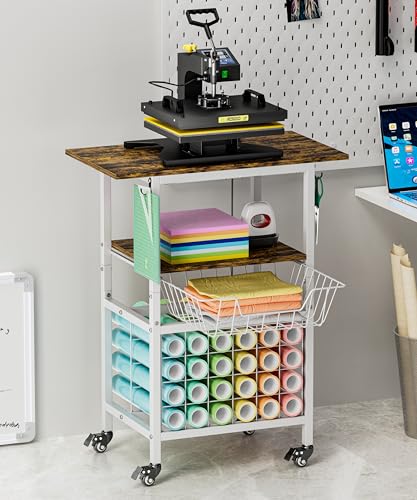
- Purpose-built vinyl storage. Rolls stored flat get crushed; rolls stored upright in sized compartments do not. The Ardier cart's vinyl roll holder uses compartments measuring 2.3 inches long by 2.3 inches wide by 2.3 inches high and is described as organizing up to 24 rolls, and the cart adds a pull-out basket and four hooks.
- Published application settings on your vinyl. Time and temperature belong on the listing. VINYL FROG gives a pressing recommendation of 10 to 15 seconds at 320°F (160°C) and a blade depth of 1 to 2 for cutting — specific enough to dial in your first test press.
- Machine compatibility stated explicitly. For small-format cutters especially, matless material and roll width decide whether a project is one pass or a jigsaw puzzle.
Common Mistakes to Avoid
- Treating overall dimensions as usable space. A cart's exterior footprint is not the clear area available for your press, and a shelf height is not clearance for a machine with a lid that swings up. Measure your press with the handle raised, then compare.
- Assuming an unpublished spec is zero. If a stand's listing does not state a weight capacity, that means the figure is not in the listing information — not that the stand is weak, and not that the manufacturer never publishes it.
- Ignoring ambiguous temperature figures. Venitor's application instructions read "a temperature of 140-150 for 10-15 seconds" without stating whether that figure is Fahrenheit or Celsius. Do not guess between those two; confirm the correct unit with the seller or manufacturer before your first press, because the wrong reading ruins both the vinyl and possibly the garment.
- Loading a cart off-center. Ardier's listing warns you to position the machine at the exact center of the wooden board to prevent tipping from uneven weight distribution. That advice applies to any wheeled stand carrying a top-heavy press.
- Improvising electrical setups. Where a table includes an outlet, follow the manufacturer's instructions for what may be plugged into it. A product's own rating tells you nothing about your home's circuit capacity, and appliance specs are not wiring guidance.
- Buying one cover sheet and calling it solved. See above: it is a consumable.
- Skipping the recall check. Before you buy any powered or rolling equipment, it is worth checking the U.S. Consumer Product Safety Commission's recall database at cpsc.gov.
Budget Considerations
Prices shift constantly, so this guide does not quote them — check the current price on Amazon for anything you are considering. What is worth thinking about is where money buys durability rather than features.
Spend first on the thing that carries weight. A press stand failure damages the press, the floor and possibly you; a mediocre weeding pen just annoys you. Published construction specs and stated load ratings are the honest signals here, and the supplied listing information for the Ardier Movable Heat Press Machine Cart with Basket and Hooks does state board load ratings.
Bundles make sense at the start and stop making sense quickly. A kit that includes vinyl, a scraper, tweezers, a weeding pen, a cutting mat and a cover sheet gets you pressing this weekend; once you know which colors and finishes you actually use, buying by the roll is the smarter path. Our HTV buying guide covers that transition in more detail.
Finally, budget for storage before you need it. Vinyl accumulates. A cart with sized roll compartments bought early costs less than the drawer system you improvise later.
Our Top Recommendations
PUNCIA 3-Tier Movable Heat Press Table Foldable Stand with Workbench — Best for small rooms that need work surface on demand
The case for this one is the expandable top. PUNCIA describes an 18.9-inch by 17.5-inch two-sided expansion platform that raises and lowers when you press the two buttons on the brackets at the same time. Fold both wings down and the stand tucks away; raise them and you have somewhere to lay out the next shirt while the current one presses.
Construction is spelled out: PUNCIA's listing specifies a thickened steel frame using 1-inch by 1-inch steel pipe and a wood board thickness of 0.6 inch. PUNCIA also supplies 4 extra anti-slip feet that can be installed as needed alongside the industrial wheels, which is a sensible option if your press is heavy and your floor is smooth.
Suits: crafters working in a shared or multi-use room who need the footprint to shrink between sessions.
Worth knowing: the supplied listing information does not state a weight capacity for the shelves or the expansion platform, so confirm that figure with PUNCIA against your specific press weight.
3 Tier Movable Heat Press Table, Foldable Heat Transfer Machine Stand — Best for multi-machine workflows
This is the organizational pick. The 3 Tier Movable Heat Press Table listing describes one foldable side panel and one retractable side, cable management holes in the tabletop, a 16-compartment vinyl roll holder on the side, and a fabric drawer. The seller's suggested layout — press on top, cutter or printer in the middle, supplies on the bottom — is exactly how a two-machine workflow wants to be arranged.
It also lists four metal wheels, two of them with brakes, and a built-in power outlet the seller calls a charging station. Treat that outlet as a convenience feature to use per the manufacturer's instructions, not as a reason to consolidate every device in the room onto one plug.
Suits: anyone running a cutter and a press together who is tired of cords crossing the work area.
Worth knowing: the supplied listing information does not state shelf weight capacities or overall dimensions, so measure your machines and ask the seller for load figures before committing.
Ardier Movable Heat Press Machine Cart with Basket and Hooks — Best for buyers who want stated load numbers
Here is the thing: the supplied listing information for the Ardier Movable Heat Press Machine Cart with Basket and Hooks publishes both dimensions and board load ratings, giving the cart as 23.7 by 13 by 30.5 inches with an upper board weight capacity of up to 50 lbs and a lower board up to 44 lbs.
Storage is thought through. The Ardier cart's vinyl roll holder uses compartments measuring 2.3 inches long by 2.3 inches wide by 2.3 inches high and is described as organizing up to 24 rolls, and the cart adds a pull-out basket and four hooks. Ardier's listing also warns you to position the machine at the exact center of the wooden board to prevent tipping from uneven weight distribution — good, specific guidance.
Suits: methodical buyers who want a published number to check their press against, plus dedicated roll storage.
VINYL FROG 30PCS Heat Transfer Vinyl Bundle with Tools – 20 Sheets PU Iron on Vinyl + 5 Metallic HTV — Best for starting from zero
If you have a press and nothing else, this covers the gaps in one order. VINYL FROG lists 30 pieces: 25 sheets total, made up of 20 PU HTV sheets and 5 metallic sheets, plus a scraper, a weeding pen, tweezers, a 12-inch by 12-inch cutting mat and one Teflon sheet. That is the cover sheet, the weeding kit and a color spread in a single purchase.
The settings are published too, which matters more than the sheet count for a first-timer. The same listing gives a pressing recommendation of 10 to 15 seconds at 320°F (160°C) and a blade depth of 1 to 2 for cutting.
Suits: beginners, classroom setups, and anyone restocking basic tools alongside vinyl.
Worth knowing: one Teflon sheet is a starting point, not a supply. Budget for replacements as it collects adhesive.
EEH Matless Smart Iron On for Cricut Joy & Joy 2 — Best for long lettering on a small cutter
Matless material solves a specific Joy annoyance. EEH's roll is a single black roll measuring 5.5 inches by 10 feet. The listing says it loads directly into Cricut Joy or Joy 2 with no cutting mat required, and supports continuous cuts up to 12 ft (3.65 m) — worth reading carefully, because the roll you receive is 10 ft, so a 12 ft cut length describes the format's capability rather than something a single roll of this size can deliver.
On durability, EEH describes the vinyl as designed to stay strong through 30+ washes without cracking, fading or peeling on compatible cotton, polyester and blended fabrics. That is the manufacturer's claim, and it is a seller statement rather than independent verification.
Suits: Cricut Joy and Joy 2 owners doing banners, wall quotes and long single-line lettering. Pair it with the workflow ideas in our Cricut Joy project guide.
Worth knowing: one color, one roll, 5.5 inches wide. It is a specialist format, not a general HTV stash.
Venitor Color Changing Puff Vinyl Heat Transfer 3D Foaming Vinyl-6 Sheets 12''x 10'' for Cricut — Best for novelty designs that shift outdoors
This is the fun one, with a caveat you must read. Venitor supplies 6 sheets at 12 by 10 inches: 1 white-to-purple, 2 white-to-blue, 2 white-to-red and 1 white-to-yellow, all of which change color under sunlight or UV light. The listing describes the material as elastic enough not to wrinkle, crack or fall off clothing, and durable enough for machine washing and drying on a normal dryer setting.
Now the caveat. Venitor's application instructions read "a temperature of 140-150 for 10-15 seconds" without stating whether that figure is Fahrenheit or Celsius. Those two readings are wildly different presses, and puff vinyl is heat-sensitive by nature. Get the unit confirmed by the manufacturer before you press, and do it on a scrap first.
Suits: kids' shirts, event merch and anything meant to be worn outside where the color shift is visible.
Worth knowing: with six sheets in four color transitions, this is a project pack rather than a production stock.
How We Research
The method here is documentary, not physical. For each product, we pull the Amazon Creators API verified product record and read every published listing feature bullet line by line, then compare the stated numbers across the products in the same category — load ratings against load ratings, dimensions against dimensions, application settings against application settings.
Where a listing publishes a figure, we quote it and attribute it to the seller or manufacturer. Where it does not, we say the supplied listing information does not state it and point you to the manufacturer, rather than filling the gap with a plausible-sounding number. Internal inconsistencies — like a temperature range with no unit — get flagged instead of quietly resolved in the direction we would guess.
All product records referenced on this page were retrieved on 9 September 2026.
How to Get the Best Deal on Amazon
- Check the listing you are actually buying. Bundles, colors and roll lengths are frequently separate offers under similar names. Confirm the sheet count or roll size matches the specification you read.
- Compare the specification, not the marketing phrase. "Heavy duty" is not a number; "upper board up to 50 lbs" is. Prefer the listing that publishes the figure.
- Watch the variation dropdown. Carts and vinyl kits often have size or color variants whose specs differ from the one described in the reviews you are reading.
- Read the return window before ordering furniture-sized items. Assembly and returns are a hassle worth understanding in advance; USA.gov's consumer protection pages explain your options when a seller will not resolve a problem.
- Buy consumables in the quantity you will use. Cover sheets and weeding tools are cheap to restock; vinyl you never press is money on a shelf.
Maintenance and Care Tips
Keep the cover sheet clean. Adhesive residue transfers to the next garment, so retire a sheet once it stops releasing cleanly rather than pressing through it.
Store vinyl rolled and upright. Sized compartments like the 2.3-inch cubes on the Ardier cart exist for a reason — flattened rolls feed and cut badly.
Lock the casters every single time. Two of the four wheels on the 3 Tier Movable Heat Press Table are described as having brakes, and brakes only help if you engage them before you press.
Wipe boards and frames down between sessions rather than after a spill sets. Fabric drawers, hooks and baskets collect weeding scraps fast, and static-clinging vinyl offcuts have a talent for ending up under a hot platen.
Re-check assembly hardware periodically on any rolling stand. Wheeled furniture under repeated clamping force works itself loose over time, and a snug frame is the difference between stable and wobbly.
Frequently Asked Questions
Final Verdict
If you want published load figures to check your press against, the Ardier Movable Heat Press Machine Cart with Basket and Hooks supplies them: its listing publishes an upper board rating up to 50 lbs, a lower board rating up to 44 lbs and full dimensions of 23.7 by 13 by 30.5 inches — check those against your press weight and footprint first. If your room demands that the workspace disappear between sessions, the PUNCIA 3-Tier Movable Heat Press Table Foldable Stand with Workbench and its 18.9-inch by 17.5-inch two-sided expansion platform is the better shape of solution. And if you are running a cutter and a press together, the 3 Tier Movable Heat Press Table, Foldable Heat Transfer Machine Stand is built around that exact layout with its 16-compartment roll holder and cable management holes.
On the materials side, start with the VINYL FROG 30PCS Heat Transfer Vinyl Bundle with Tools – 20 Sheets PU Iron on Vinyl + 5 Metallic HTV if you are assembling a kit from nothing, add the EEH Matless Smart Iron On for Cricut Joy & Joy 2 if you own a Joy and want long lettering without a mat, and treat the Venitor Color Changing Puff Vinyl Heat Transfer 3D Foaming Vinyl-6 Sheets 12''x 10'' for Cricut as a novelty buy you press only after confirming that unlabeled temperature unit.
The supplies that do not appear as picks here — mats, pillows, rulers — are still the cheapest reliability upgrades you can make. Buy them on the criteria in the features section, and see our craft room organization guide for laying the whole room out.
Sources & Methodology
Nobody at this website pressed a shirt, loaded a cart or timed a transfer for this article; there is no lab here and no sample room. What this page is built on is close reading of Amazon Creators API verified product records and the manufacturers' own listing feature bullets for the six products named above, retrieved on 9 September 2026, with general safety and consumer guidance drawn from the CPSC and USA.gov.
For a category like this one, that is genuinely enough to decide most of the purchase: stand capacities, board dimensions, roll lengths, sheet counts and published press settings are all specification questions, and the products that publish them can be compared against your own equipment before you spend a cent. What published specs cannot tell you is long-term wobble, caster wear or how a cover sheet behaves on its twentieth press — for those, weigh owner feedback on the listing itself alongside the numbers here.