As an Amazon Associate this site earns from qualifying purchases.
Quick Picks
| Product | Format | Standout published spec | Best suited to |
|---|---|---|---|
| HTVRONT Auto Heat Press Machine for T Shirts with Auto Release | Flat 15x15 automatic | Listing states it auto-lowers, self-adjusts to project thickness up to 1 inch, then auto-releases and rises when the timer ends | Garment batches and repeat shirt orders |
| HTVRONT 3 in 1 Auto Heat Press Machine with Adjustable Pressure | Flat 12x10 with mug and hat attachments | Manufacturer lists a maximum adjustable pressure of 80kg (170lb) with an on-screen pressure display | Mixed product lines from one footprint |
| HTVRONT Auto Hat Press Machine | Dedicated curved hat press | Listing states over 176 lb (80 kg) of pressure and control from 104-410°F / 40-210°C, 1-999 s | Caps, patches and structured brims |
| HTVRONT Auto Tumbler Heat Press Machine | Curved tumbler/mug press | Listing states it fits 2.9-3.2 inch diameters and 280ml-850ml vessels, to a maximum of 390°F/200°C | Sublimation drinkware sellers |
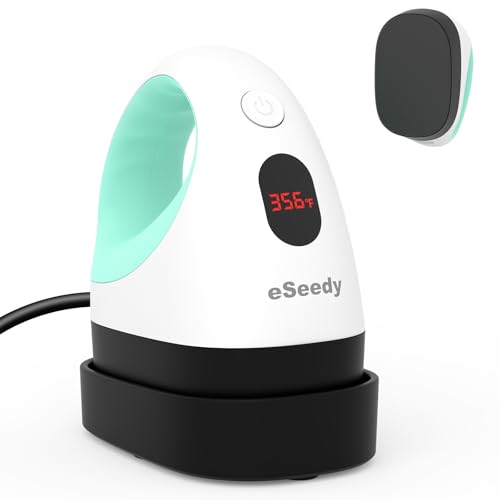
| eSeedy Mini Heat Press Machine with LED Display for Heat Transfer Crafts | Handheld mini | Listing gives a 2.87 x 4.43 inch heat plate and a 0.79 lb weight | Small placements, pockets, shoes, travel |
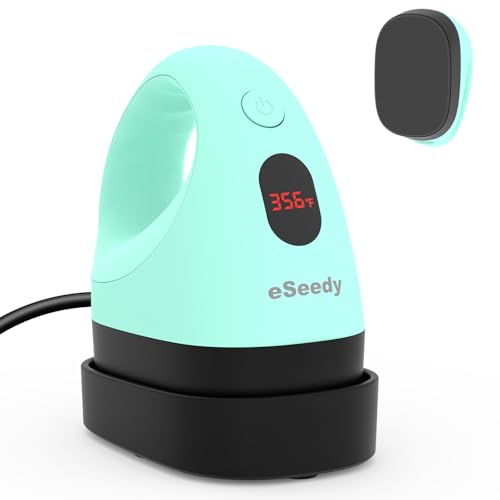
| eSeedy Mini Heat Press Machine with LED Display for Heat Transfer Crafts | Handheld mini (second listing) | Same published specification set: three fixed levels at 284°F, 320°F and 356°F | A second mini unit or an alternate listing |
Disclosure: We earn a small commission from qualifying Amazon purchases at no extra cost to you.
As an Amazon Associate, we earn from qualifying purchases.Last Updated: September 2026
Look, "is an auto heat press worth the money" is not really a question about heat. Every press in this category gets hot and holds a temperature. What you are actually buying when you step up to an automatic model is the removal of two human variables: how hard you clamp, and when you let go.
That is the entire pitch. Whether it justifies the gap over a basic manual clamshell is a math problem about your volume, your materials and your wrists — not a matter of taste.
This guide breaks down the press formats, the published specifications that actually predict results, the mistakes that cost beginners the most money, and where each automatic model in our research set fits. Offers on Amazon change constantly, so check the current price on Amazon before you settle any budget question here.
The Short Answer: When an Auto Heat Press Earns Its Price
An auto press earns its money in three situations: repeat batch work, pressure-sensitive materials like DTF film and puff vinyl, and any physical limitation that makes clamping a manual handle uncomfortable. In those cases the automation is buying you consistency and repetition, not convenience.
It does not earn its money if you press a handful of shirts a month at one forgiving setting on standard heat transfer vinyl. A manual clamshell applies the same heat; you simply supply the pressure and watch the clock yourself.
The honest framing is this: automation converts a skill into a setting. If you already have the skill and low volume, you are paying for something you can do yourself. If you have volume, the machine repeats that setting hundreds of times without getting tired at 9pm.
What "Auto" Actually Means on a Heat Press Spec Sheet
An automatic heat press is one where the machine itself lowers the platen, applies the pressure and lifts again on a timer, instead of you pulling a handle and deciding when the press is tight enough.
Read the bullets closely, because "auto" covers at least three different mechanisms.
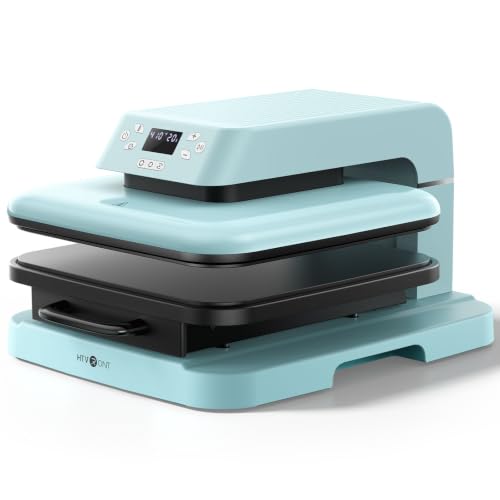
Auto close and auto release. HTVRONT's 15x15 listing describes loading a project onto a tray, pushing it into the machine and pressing the "R" button, after which the press lowers, adjusts to the thickness of the project up to 1 inch, and automatically releases and rises when the countdown ends. That is the full loop.
Auto pressure by object. The tumbler model works differently. Its listing says the press automatically applies pressure based on the tumbler's diameter with a single click. You are not dialing pressure; the machine reads the vessel.
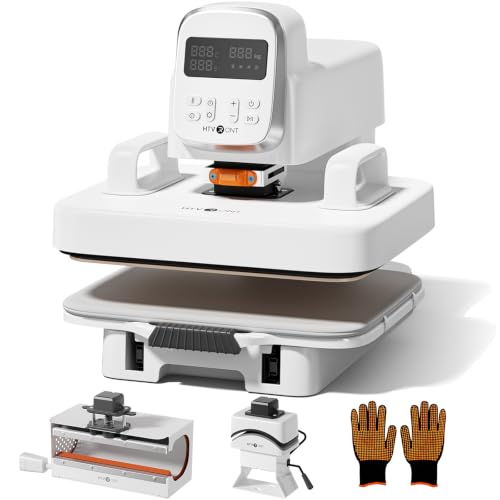
Adjustable, displayed pressure. The 3-in-1 model takes the opposite approach: a pressure adjustment system with a value shown on screen, up to a stated maximum of 80kg (170lb). That is automation plus manual control, which matters if you press materials that need different clamp forces.
Different mechanisms, same headline word. Decide which one your work actually needs.
Types of Heat Press Explained
| Type | How pressure is applied | Typical strength | Typical limitation |
|---|---|---|---|
| Manual clamshell (flat) | You pull a handle down and lock it | Simplest mechanism, lowest cost tier, no motor to fail | Pressure depends on your arm and your knob setting every single time |
| Automatic flat press | Motor lowers and lifts the platen on a timer | Repeatable clamp force and release without you standing over it | More electronics; you are trusting the machine's pressure logic |
| Specialty curved press (hat, tumbler) | Curved platen matched to the object | Contact on a shape a flat platen cannot reach properly | Fits only within the stated size window |
| Handheld mini press | You press down by hand, small plate | Portable, fast to heat, cheap entry point | Plate area limits you to small designs; pressure is entirely manual |
The honest read: format matters more than automation. A flat auto press does not press a curved cap well, no matter how good its motor is. That is why the HTVRONT Auto Hat Press Machine, Hat Heat Press Machine is a dedicated curved unit with two hat platens for adult hats and kids' smaller caps. The HTVRONT 3 in 1 Auto Heat Press Machine with Adjustable Pressure, 12X10 takes the other route, shipping with dedicated mug and hat attachments for a flat machine.
Key Features to Look For, Ranked by Importance
1. Press area matched to your actual designs
A 15x15 flat platen covers a standard adult front print in one pass. The HTVRONT 3-in-1 is listed at 12x10, which is a smaller working window — fine for most chest prints, tighter for oversized back placements. The eSeedy mini's plate is listed at 2.87 x 4.43 inches, which is a pocket-logo tool, not a shirt tool.
Note that a stated platen size tells you the heated area only. It does not establish what will physically fit around the machine's frame, and none of the supplied listings state that clearance.
2. Pressure, stated as a number
Pressure is where cheap presses quietly fail. Two of these listings publish figures: the hat press is described as over 176 lb (80 kg), and the 3-in-1 lists a maximum adjustable pressure of 80kg (170lb). The two listings express the conversion differently, so treat both as the manufacturer's own published claim rather than a verified measurement.
The supplied 15x15 listing does not state a pressure figure at all; it describes automatic thickness adjustment up to 1 inch instead. If exact clamp force matters to your material, that absence is worth a question to the seller.
3. Temperature range and how fast it gets there
HTVRONT states the 15x15 reaches a common-use temperature of 320°F/160°C within 4 minutes using NTC thermistor technology and a dual-tube heating engine. The same listing claims it saves nearly 130 seconds heating to 410°F/210°C compared with other automatic presses — a comparative marketing claim with no named baseline, so weigh it accordingly.
The hat press publishes a usable range of 104-410°F / 40-210°C with time set from 1-999 s. The tumbler press tops out at a stated 390°F/200°C. That ceiling difference is not a defect; drinkware sublimation runs cooler than some film transfers.
4. Even heat distribution
Cold spots ruin transfers at the edges. HTVRONT credits even distribution on the 15x15 to its NTC thermistor and dual-tube heating engine, and on the hat press to a cast-aluminum heat plate with PTFE coating that helps prevent sticking. These are design explanations from the manufacturer, not independent thermal maps — no such map exists in the supplied information for any of these units.
5. Presets and repeatability
The 15x15 lists 4 fast modes plus 2 customer-defined modes and an "Auto" button for batch pressing. The hat press lists two customizable preset modes. If you run three or four recurring material recipes, saved presets remove a real source of nightly error.
6. Safety behaviour
The HTVRONT Auto Heat Press Machine for T Shirts with Auto Release, 15X15 describes a 15-minute inactivity auto-off. The HTVRONT Auto Tumbler Heat Press Machine - Sublimation Tumblers, Glasses states the same 15-minute inactivity shut-down. The HTVRONT 3 in 1 Auto Heat Press Machine with Adjustable Pressure, 12X10 also lists a 15-minute auto shut-off. Both eSeedy Mini Heat Press Machine with LED Display for Heat Transfer Crafts listings (B0CZDH9ZHP and B0CZDLZCQJ) describe a 15-minute automatic power-off. The supplied listing for the HTVRONT Auto Hat Press Machine, Hat Heat Press Machine does not state an auto-off behaviour. The tumbler press adds an emergency stop: pressing "R" halts heating and releases the heat pad instantly. The 15x15 describes H-Cooling technology, multilayer heat insulation and a side handle positioned away from hot areas.
One scope note that matters: an auto-off timer is a protection against a forgotten machine. It is not permission to leave a hot press running unattended, and none of these listings say otherwise.
7. Certification claims, read literally
The 15x15 and the 3-in-1 listings both state FCC certification. FCC certification concerns electromagnetic emissions. It is a compliance claim made on the listing, not a broad safety endorsement, and it is not a substitute for checking recall and safety notices through the U.S. Consumer Product Safety Commission.
8. Warranty, when stated
Only one of these listings states a term: HTVRONT gives the 15x15 a warranty period of 1 year from the date of purchase. The other supplied listings do not state a warranty length. That is unknown, not zero — ask the seller before assuming.
Common Mistakes to Avoid
- Buying automation to fix a temperature problem. If your transfers peel because the heat or dwell time is wrong, an auto press repeats the wrong recipe more consistently. Fix the recipe first.
- Buying a flat press for curved products. A 15x15 platen cannot make even contact with a structured cap crown. That is the entire reason a dedicated hat press with two hat platens exists.
- Ignoring the size window on specialty presses. The tumbler press is stated to accommodate 2.9 to 3.2 inch diameters and 280ml-850ml vessels. Your 20oz tumbler either falls in that window or it does not.
- Treating a mini press as a shirt press. A 2.87 x 4.43 inch plate does a pocket logo. Walking it across a full chest print in overlapping passes is how you get visible seams in a transfer.
- Assuming multi-function equals full-size. The 3-in-1 gives you mug and hat attachments with a stated 1-second accessory swap, but its flat platen is 12x10, not 15x15.
- Skipping the gloves. HTVRONT explicitly instructs users to wear the included heat-resistant gloves when changing attachments on the 3-in-1. That instruction exists for a reason.
- Reading marketing comparatives as data. "Saves about 3 minutes compared to standard tumbler presses" is HTVRONT's claim about its tumbler press, with no named comparison model.
Budget Considerations: How to Think About the Price Gap
Stop comparing sticker to sticker and start comparing per-press cost. Ask four questions.
How many presses per week? Automation pays back on repetition. Ten shirts a night is a different machine argument than ten shirts a season.
What materials? Rhinestones, embroidered patches, DTF film and puff vinyl are the materials HTVRONT names for its high-pressure hat unit. Pressure-hungry materials are where a published pressure figure justifies its cost.
How many product categories? If you sell shirts, mugs and caps, one 3-in-1 with swappable attachments is a different capital decision than three dedicated machines — but it is also a smaller flat platen and a single machine that stops all three product lines if it goes down.
What is your physical situation? Repeated manual clamping is real work. If that is a barrier, the automation is not a luxury feature.
And the obvious one: verify the current offer yourself. Check the current price on Amazon for each model before you commit, because the ranking of these machines by cost changes with whatever promotion is live. For a deeper format-by-format breakdown, see our heat press buying guide for beginners and our best heat press machines roundup.
Our Top Recommendations
HTVRONT Auto Heat Press Machine for T Shirts with Auto Release, 15X15 — Best for garment batch production
This is the model the whole "is it worth it" argument revolves around, and its case rests on one specific published behaviour: you load the tray, push it in, press "R", and the press lowers, adjusts itself to the thickness of the project up to 1 inch, then auto-releases and rises when the countdown finishes. That is the full hands-free loop a manual clamshell cannot offer at any price.
Safety-wise the listing describes H-Cooling technology, multilayer heat insulation, a drawer-slide placement plate, a side handle away from hot areas, FCC certification and a 15-minute inactivity shut-off.
Strengths: Full 15x15 platen, genuine auto-close and auto-release cycle, thickness self-adjustment to 1 inch, six selectable modes, and a stated 1-year warranty from date of purchase.
Limitations to weigh: The supplied listing does not state a clamp pressure figure, which is the one number pressure-sensitive material users most want. Its "saves nearly 130s" heating claim names no comparison model.
Verdict: If shirts are your product and volume is your problem, this is the sensible automation buy. Check Price on Amazon
HTVRONT 3 in 1 Auto Heat Press Machine with Adjustable Pressure, 12X10 — Best for sellers running shirts, mugs and hats
Here is the interesting one for anyone weighing three purchases against one. It ships with dedicated mug and hat attachments and advertises a 1-second accessory swap instead of conventional mold replacement, with heat-resistant gloves included and explicitly recommended during swaps.
The HTVRONT 3 in 1 Auto Heat Press Machine with Adjustable Pressure, 12X10 lists a pressure adjustment system with the value displayed, up to a stated maximum of 80kg (170lb), which HTVRONT positions specifically for DTF projects. It shares the same NTC thermistor and dual-tube heating engine description, FCC certification and 15-minute auto shut-off.
Strengths: Adjustable and displayed pressure to a stated 80kg (170lb), three product categories from one machine, fast attachment changes.
Limitations to weigh: The platen is 12x10, meaningfully smaller than a 15x15 working area. The supplied listing does not state a warranty term.
Verdict: The right buy for a small shop with a mixed catalogue and limited bench space, provided 12x10 covers your largest design. Check Price on Amazon
HTVRONT Auto Hat Press Machine, Hat Heat Press Machine — Best for caps, patches and high-pressure transfers
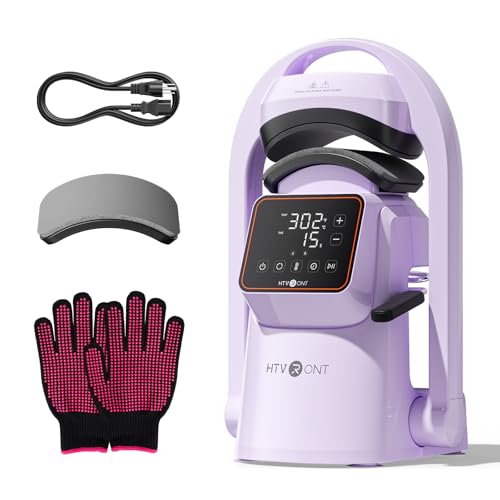
This is the pressure specialist of the group. HTVRONT lists over 176 lb (80 kg) of pressure and names hotfix rhinestones, embroidered patches, DTF transfer film, puff heat transfer vinyl and sublimation paper as target materials — all things that punish weak clamping.
Control comes via touchscreen across 104-410°F / 40-210°C and 1-999 s, over a cast-aluminum heat plate with PTFE coating to reduce sticking.
Strengths: Published high pressure figure, wide temperature and time ranges, dual platens for two cap sizes, saved presets for batch runs.
Limitations to weigh: It is a hat press only — no flat garment capability. The supplied listing does not state a warranty term.
Verdict: Buy it if caps are a real revenue line rather than an occasional favour. Check Price on Amazon
HTVRONT Auto Tumbler Heat Press Machine - Sublimation Tumblers, Glasses — Best for sublimation drinkware within its size window
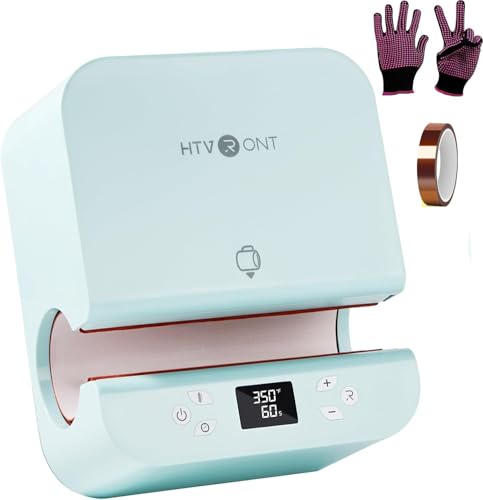
The automation logic here is genuinely different: HTVRONT states the press automatically applies pressure based on the tumbler's diameter with a single click, rather than asking you to set a value. For drinkware, where a wrap that is slightly loose produces ghosting, that is the feature that matters.
The stated fit window is 2.9 inches (7.5cm) to 3.2 inches (8.1 cm) in diameter and 280ml to 850ml, across mugs, tumblers, glassware, cups, water bottles and sippy cups. Maximum temperature is stated at 390°F/200°C, and HTVRONT claims about 3 minutes saved on heat and transfer time versus standard tumbler presses. Safety includes a 15-minute inactivity shut-off and an emergency stop where pressing "R" halts heating and releases the heat pad instantly.
Strengths: Diameter-driven automatic pressure, broad vessel type list, instant emergency release.
Limitations to weigh: That diameter window is narrow and absolute — measure before buying. The time-saving claim names no comparison product, and the supplied listing does not state a warranty term.
Verdict: A focused tool that solves one job well, assuming your blanks fall inside 2.9-3.2 inches. Check Price on Amazon
eSeedy Mini Heat Press Machine with LED Display for Heat Transfer Crafts — Best for small placements and portability
Here is the honest counterweight to the whole automation argument: if your projects are small, none of the motorised machinery applies to you. This mini is listed at 4.5 x 2.9 x 5.1 inches with a 2.87 x 4.43 inch heat plate, weighing 0.79 lbs and shipping with a storage bag.
Heating is described as roughly 3 minutes to 284°F (140°C), then around 40 seconds more to 320°F (160°C) and roughly 50 more to 356°F (180°C) from room temperature. Those three values are the three fixed settings — Low, Medium and High — selected through a single button that also toggles °C/°F and retains your last setting. An LED display shows the temperature, and eSeedy includes a high-temperature-resistant safety base plus a 15-minute auto power-off.
Strengths: Very light at 0.79 lbs, clear published heat-up figures, simple one-button operation, LED temperature display, safety base.
Limitations to weigh: Three fixed levels only, so you cannot dial an arbitrary temperature. Pressure is entirely down to your hand, and the small plate means multiple passes on anything larger than a small graphic.
Verdict: The right buy for pockets, shoes, socks, masks, coasters and travel — and a reasonable way to test whether you need a big press at all. Check Price on Amazon
eSeedy Mini Heat Press Machine with LED Display for Heat Transfer Crafts — Best for a second mini unit or an alternate listing
This is a separate Amazon listing (ASIN B0CZDLZCQJ) whose published specification set matches the one above point for point: the same 4.5 x 2.9 x 5.1 inch body, the same 2.87 x 4.43 inch heat plate, the same 0.79 lb weight, the same Low/Medium/High steps at 284°F, 320°F and 356°F, the same LED display, safety base and 15-minute auto power-off.
The supplied listing information does not state what distinguishes this ASIN from the other — colour or bundle variation is a reasonable guess, but it is a guess, so check the live listing options before choosing between them.
Strengths: Identical published feature set, useful if you want a second unit parked on a different heat level for two-material workflows.
Limitations to weigh: The same small-plate and manual-pressure constraints apply, and the difference between the two ASINs is not documented in the supplied information.
Verdict: Worth checking against the other listing purely on whichever variant matches your preference and availability. Check Price on Amazon
How to Get the Best Deal on Amazon
- Check both eSeedy ASINs. Two listings with matching published specifications can carry different offers at any moment. Compare them side by side.
- Compare a bundle against separate machines honestly. The 3-in-1 includes mug and hat attachments; price that against a dedicated hat press and a dedicated tumbler press, then decide whether a 12x10 flat platen is enough for you.
- Confirm the seller and warranty before checkout. Only the 15x15 listing states a term — 1 year from date of purchase — so ask about the others rather than assuming parity.
- Read the current bullets on the live page. Manufacturers revise listings; the record here was retrieved on 2026-09-09.
- Know your rights before you need them. General consumer protection and complaint guidance is published at USA.gov.
Maintenance and Care Tips
- Keep the platen clean and free of adhesive residue. The hat press uses a PTFE coating to help prevent sticking, and coatings last longer when you are not scraping cured vinyl off them.
- Use a cover sheet between the platen and your transfer as standard practice. It protects the surface that determines your heat evenness.
- Wear the supplied heat-resistant gloves when swapping attachments on the 3-in-1 — HTVRONT states this explicitly in its instructions.
- Let the machine cool fully before storing or covering it. HTVRONT describes H-Cooling technology and multilayer heat insulation on the 15x15 for dissipating heat after shutdown, which is a design feature, not an instant-cool guarantee.
- Do not rely on the 15-minute inactivity auto-off as a babysitter. Treat it as a backstop and power down deliberately.
- Store the eSeedy mini in its included storage bag once cool, and keep it on its high-temperature-resistant safety base while hot.
How We Research
This website does not perform hands-on product testing, and it does not operate a lab. Every specification in this guide was read from Amazon Creators API verified product records and the product listing feature bullets attached to each ASIN, retrieved on 2026-09-09.
The work here is comparative reading: pulling out the numbers each manufacturer publishes, checking whether the same number is published for every model before making a comparison, and flagging where a figure is simply absent rather than guessing at it. Where a claim is comparative marketing language with no named baseline — "saves nearly 130s", "about 3 minutes" — it is labelled that way rather than repeated as fact.
Frequently Asked Questions
Is an auto heat press actually better than a manual one?
Better at repetition, not automatically better at heat. An automatic model applies pressure and releases on the timer without you; the HTVRONT 15x15 listing describes it lowering, self-adjusting to the project thickness up to 1 inch and rising again on its own. A manual press reaches the same temperatures and requires you to supply that consistency yourself.
What size heat press do I need for T-shirts?
A 15x15 platen covers a standard adult front print in a single press. A 12x10 flat area, like the one on the HTVRONT 3-in-1, handles most chest placements but gives you less margin on oversized designs.
Can one machine do shirts, mugs and hats?
Yes, if you accept a smaller flat area. The HTVRONT 3 in 1 Auto Heat Press Machine ships with dedicated mug and hat attachments and advertises a 1-second accessory swap, but its flat platen is 12x10.
How much pressure do I need for DTF transfers?
The supplied listings do not state a required pressure for DTF, so treat your film supplier's instructions as the authority. What they do publish: the HTVRONT hat press is listed at over 176 lb (80 kg) of pressure and names DTF transfer film among its target materials, and the 3-in-1 lists an adjustable maximum of 80kg (170lb) positioned for DTF projects.
Will a tumbler press fit my 20oz cup?
Only if its diameter falls inside the stated fit window. The HTVRONT Auto Tumbler Heat Press Machine - Sublimation Tumblers, Glasses (ASIN B0CG166C88) is listed as accommodating tumblers 2.9 inches (7.5cm) to 3.2 inches (8.1 cm) in diameter and 280ml to 850ml. The supplied listing gives no volume-to-diameter equivalence, so measure your 20oz cup's diameter at its widest point and compare it against that 2.9-3.2 inch range rather than relying on the ounce rating.
Are mini heat presses worth buying?
For small work, yes. The eSeedy mini is listed at 0.79 lbs with a 2.87 x 4.43 inch heat plate and three settings at 284°F, 320°F and 356°F — plenty for pocket logos, shoes and coasters, and far too small to be your only press for shirts.
Do these presses shut themselves off?
Most of them do. The HTVRONT Auto Heat Press Machine for T Shirts with Auto Release, 15X15, the HTVRONT Auto Tumbler Heat Press Machine - Sublimation Tumblers, Glasses and the HTVRONT 3 in 1 Auto Heat Press Machine with Adjustable Pressure, 12X10 each state a 15-minute inactivity auto power-off. Both eSeedy Mini Heat Press Machine with LED Display for Heat Transfer Crafts listings state the same 15-minute automatic power-off. The supplied listing for the HTVRONT Auto Hat Press Machine, Hat Heat Press Machine does not state an auto power-off. The tumbler press additionally describes an emergency stop where pressing "R" halts heating and releases the heat pad instantly. Neither feature makes an unattended hot press acceptable.
Final Verdict
Here is the opinionated version. If you press shirts in batches and the bottleneck is your own attention span, the HTVRONT Auto Heat Press Machine for T Shirts with Auto Release, 15X15 is the buy that changes your evenings — the full-size platen plus the automatic lower, thickness-adjust to 1 inch and auto-release cycle is exactly what a manual clamshell cannot replicate. Check Price on Amazon
If your catalogue is mixed and your bench is small, the HTVRONT 3 in 1 Auto Heat Press Machine with Adjustable Pressure, 12X10 is the more interesting machine, because the HTVRONT 3 in 1 Auto Heat Press Machine with Adjustable Pressure, 12X10 lists an adjustable pressure system with the value displayed, up to a stated maximum of 80kg (170lb) — as long as 12x10 covers your biggest design. Check Price on Amazon
And if you are still asking whether you need automation, you probably do not yet. Start with a mini or a manual clamshell, learn your material recipes, and let volume make the argument for you. Automation is worth paying for when it is repeating a process you have already got right — not when it is hiding one you have not. For more on individual models, see our HTVRONT auto heat press review and our mini heat press comparison.
Sources & Methodology
Nobody at this website pressed a shirt, timed a heat-up, or measured a clamp force for this guide — there is no lab here and no test bench, and we say that plainly rather than dressing research up as experience. What went into it is close reading of Amazon Creators API verified product records and the product listing feature bullets for all six ASINs above, retrieved on 2026-09-09, with each published number kept attached to the manufacturer that published it.
For heat presses specifically, that kind of research answers the questions that are actually decided on paper: platen size, temperature range, pressure ratings where they are stated, fit windows for curved blanks, and which safety behaviours the manufacturer commits to in writing. It cannot tell you how a machine's motor holds up after a year of batch runs — for that, weigh the stated warranty terms and watch owner feedback on the live listings, plus recall and safety notices published by the CPSC.