Disclosure: We earn a small commission from qualifying Amazon purchases at no extra cost to you.
As an Amazon Associate, we earn from qualifying purchases.Last Updated: September 2026
Short answer: nine times out of ten, a cutting machine that won't connect is not broken. The pairing record on your computer has gone stale, the machine is still bonded to a different device, or the design app is running with an outdated cached connection. Power-cycle the machine, remove the saved Bluetooth pairing on the computer, reboot the computer, then re-pair from scratch before you touch anything else. If Bluetooth still fails, a direct USB cable is the fastest way to prove whether the fault is in the radio or in the machine itself.
Here's the thing: most "my machine died" posts are a software handshake problem wearing a hardware costume. Work in the order below and you'll know which one you have inside ten minutes.
The Problem: Three Failures That Look Identical
From the user's chair, every connection fault looks the same — a spinning "searching for machine" wheel. Underneath, there are three distinct causes, and they need different fixes.
1. A stale or duplicated Bluetooth bond. Your laptop stores a pairing key for the machine. If the machine was later paired to a tablet or a second laptop, or if a driver update rewrote the adapter's address, the stored key no longer matches. The machine shows up in the list, pairs, and then silently refuses to accept a job.
2. A USB enumeration failure. A charge-only cable, an unpowered hub, or a flaky front-panel port means the computer never assigns the machine a device address. This is the classic "vinyl cutter USB not recognized" case, and it is almost always the cable or the port.
3. An app-side detection failure. The operating system sees the machine perfectly, but the design software doesn't. That points at app permissions, a partially applied update, or a firmware version the current app build won't talk to.
Step-by-Step: Fix the Bluetooth Connection
- Power-cycle in the right order. Turn the machine off at its own switch, wait roughly thirty seconds so the radio fully drops, then power it back on. Do not just close the lid.
- Forget the device on the computer, not the machine. In Windows Bluetooth settings or macOS Bluetooth preferences, remove the saved entry for the cutter entirely. Half-fixes fail here because the old key survives.
- Reboot the computer. A reboot clears the Bluetooth stack. Sleep and wake does not.
- Remove competing devices. Temporarily disconnect wireless headphones, a second mouse, and any other paired accessory. Crowded 2.4 GHz environments are a common cause of pairings that connect and then drop mid-cut.
- Re-pair with the machine within a few feet of the computer. Distance and desk metal matter more during pairing than during a cut.
- Sign out of the design app and back in. This forces the app to rebuild its device list rather than reuse a cached entry.
- Check for firmware and app updates last, then re-pair again. An update applied while the machine was disconnected can leave the two halves out of sync until you re-establish the bond.
Step-by-Step: Fix "USB Not Recognized"
- Swap the cable first. Use a known data cable, not the one that came with a phone charger. Charge-only cables are the single most common false alarm.
- Go straight into the computer, no hub. Rear ports on a desktop are wired directly to the board and are more reliable than front panel headers.
- Try a second port and a second computer. If a second machine also fails to enumerate the cutter, the fault is on the cutter side.
- Look in Device Manager or System Information. If the machine appears as an unknown device, that is a driver problem. If nothing appears at all, that is a cable, port, or hardware problem.
- Disable USB selective suspend on Windows laptops if the machine drops out mid-job while running on battery.
Step-by-Step: Design Software Doesn't Detect the Machine
- Grant the app Bluetooth and local network permissions. On recent macOS and Windows builds, a denied permission produces exactly the same empty device list as a dead radio.
- Fully quit the app — not minimize — and relaunch.
- Clear the app cache or reinstall. A reinstall preserves your cloud designs on account-based platforms.
- Try a different platform. This is the underrated move. Cricut lists Design Space as a free app for iOS, Android, Windows, and Mac, so a phone or tablet may be worth trying if your machine supports connecting to one — the supplied listing does not state which devices the machine itself pairs with. If the tablet connects and the laptop doesn't, you have isolated the fault to the laptop.
- Confirm the project isn't the problem. A job that fails to send on one design but sends on a blank test square is a file issue, not a connection issue.
Recommended Product
Only one product in this research pool is an actual cutting machine, so that is the only one recommended here. A replacement machine is a last resort, not a first step — exhaust the checklist above first.
Check Price on Amazon
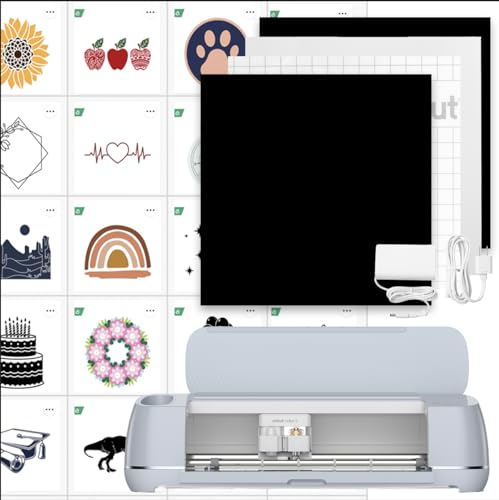
Why this one is relevant to a connectivity article at all: the app matters as much as the hardware. For the Cricut Maker 3 & Digital Content Library Bundle, Cricut lists Design Space as a free app for iOS, Android, Windows, and Mac. The supplied listing does not state which of those device types the machine itself can connect to, so treat that as app availability rather than proven machine connectivity.
On capability, the listing credits the Maker 3 with cutting more than 300 materials and compatibility with more than 13 tools to cut, score, write, deboss, and engrave. Cricut's product title also markets the Maker 3 as 2X faster with 10X cutting force. Read those as manufacturer comparison claims — the listing does not state what baseline machine they are compared against, so treat them as directional rather than absolute.
For larger work, Cricut Smart Materials allow a single image up to 12 ft (3.6 m), or repeated cuts up to 75 ft, all without a mat in one go. Honestly, that is the spec that matters most for anyone doing signage or long decal runs, because a long unattended cut is exactly when a dropped connection hurts most — worth pairing over the most stable route you have.
The bundle side: it comes with a digital library of 30 images that the listing says is entitled to your account during machine registration, and it includes 50 free project templates once you register the machine, with Cricut Access offered separately as a subscription covering 300,000+ images, 7,000+ ready-to-make projects, and 700+ fonts. Cricut also states that registering the machine unlocks a Learning Plan built into Design Space with beginner's guides, expert-led courses, and workshops.
Where the evidence stops: the supplied listing information for this bundle does not state the machine's wireless radio version, USB port type, or minimum operating-system versions. If your troubleshooting hinges on any of those, check Cricut's own system requirements before buying rather than assuming compatibility with an older laptop.
Tips for Best Results
- Keep the machine and the computer on the same side of the room during long cuts. Wireless range issues surface as mid-job stalls, not as pairing failures.
- Pair one computer at a time. Multiple simultaneous bonds are the leading cause of intermittent, unrepeatable drops.
- Do firmware updates over USB when the option exists. A dropped wireless firmware flash is far worse than a dropped print job.
- Label your good data cable. You will otherwise spend an evening testing the charger cable again.
Common Mistakes to Avoid
- Reinstalling the app first. It is slow and it rarely fixes a Bluetooth bond problem. Forget-and-re-pair first.
- Assuming a charge-only cable is a data cable. They look identical.
- Updating the app while the machine is disconnected, then not re-pairing.
- Buying a cheap unbranded USB adapter to "fix" a port. If a power accessory ever overheats, smokes, or presents an electrical hazard, the U.S. Consumer Product Safety Commission accepts consumer reports of unsafe products.
- Skipping the second-device test. A phone or tablet answers the "is it the machine or the laptop?" question in two minutes.
How We Research
This website does not do hands-on testing and runs no lab. For this page, the product information came from an Amazon Creators API verified product record and the product listing feature bullets for the listed ASIN, retrieved 2026-09-09. Everything attributed to the manufacturer is quoted from those published bullets, and anything the bullets do not state is called out as unstated rather than filled in from memory. The troubleshooting sequence itself is general, platform-level guidance and is not derived from any product listing.
Related Resources
- Choosing a heat press for vinyl projects
- Design Space basics for new users
- Blade and mat maintenance guide
Frequently Asked Questions
Is USB more reliable than Bluetooth for cutting machines? As a general rule, a wired connection removes radio interference and range from the equation, so it is the better choice for long or unattended jobs and for firmware updates. It is also a useful narrowing test: if USB works and Bluetooth doesn't, the problem is more likely on the wireless side, though that alone does not rule out a hardware fault — keep your warranty or return option open if the machine still misbehaves.
My laptop says "USB device not recognized." Is the machine dead? Not necessarily. Test a known data cable, a rear port, and a second computer before concluding anything. Failure across all three is the point at which hardware becomes the likely cause.
Can I use a tablet instead of my laptop while I troubleshoot? Often yes, depending on your machine's software. Cricut lists Design Space as a free app for iOS, Android, Windows, and Mac, but that is app availability only: for the Cricut Maker 3 & Digital Content Library Bundle (ASIN B0BJH68KGL), the supplied listing does not state which devices the machine itself can connect to, so check Cricut's own device-compatibility documentation before relying on a tablet as a second route.
Will a new machine automatically fix my connection problems? No. If the fault is on your computer — a dying Bluetooth adapter, a permissions block, a failing port — a new machine inherits the same environment. Prove the fault is machine-side first.
What does the Cricut Maker 3 bundle actually include beyond the machine? The bundle comes with a digital library of 30 images that the listing says is entitled to your account during machine registration, and it includes 50 free project templates once you register the machine. Cricut Access, which the listing describes as covering 300,000+ images, 7,000+ ready-to-make projects, and 700+ fonts, is a separate subscription.
Does the listing say which operating system versions are required? No. The supplied listing information for this bundle does not state the machine's wireless radio version, USB port type, or minimum operating-system versions, so check the manufacturer's own system requirements against your computer before purchase.
Final Verdict
Fix the connection before you spend money. The forget-reboot-re-pair sequence plus a known-good data cable resolves the overwhelming majority of these cases, and a second device settles the rest by elimination.
The supplied listing does not state which devices the machine itself can connect to, so do not assume a tablet or phone will drive it. Its long-format capability — Cricut Smart Materials allow a single image up to 12 ft (3.6 m), or repeated cuts up to 75 ft, all without a mat in one go — makes it a fit for signage and decal work rather than small one-off cuts. Just confirm system requirements with Cricut first, because the supplied listing does not resolve them.
Sources & Methodology
Nothing on this page was physically or laboratory-tested by this website; no cutter was plugged in, paired, or cut with on our behalf. What was done is documentary: the Amazon Creators API verified product record and the individual product listing feature bullets for ASIN B0BJH68KGL were read closely on 2026-09-09, and every manufacturer figure quoted above is traced back to those bullets, with gaps flagged as unstated rather than guessed. For a connectivity problem, that kind of evidence is genuinely useful for one thing — telling you which platforms a machine's design app officially supports and what it can cut — while the fix itself depends on your own computer, cable, and radio environment, which no listing can describe.
Additional references: CPSC for unsafe-product reporting and USA.gov consumer protection for complaint and refund guidance.